Satellite pass predictor
When the ISS or any satellite flies over you this week — with naked-eye visibility and calendar export. 15,000+ satellites · live
SkyLive for iPhone & Android
Never miss a pass again
- Alerts minutes before the ISS or Starlink flies over you
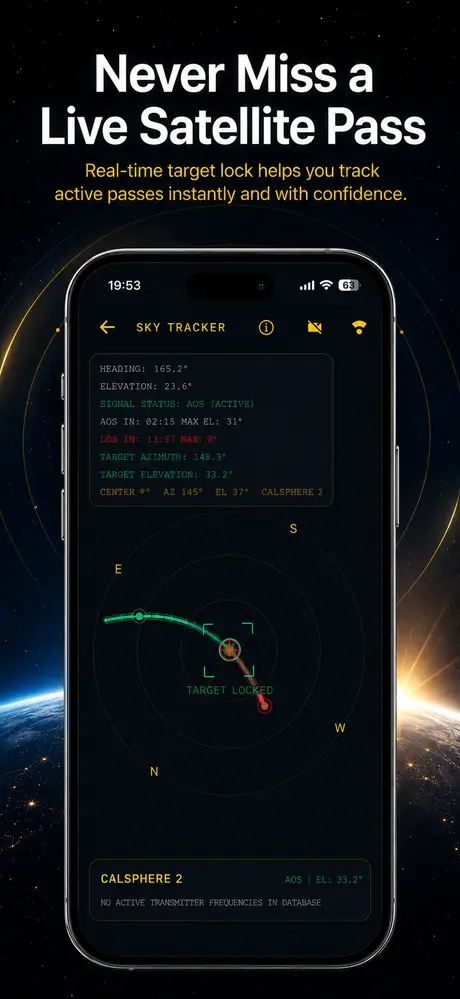
- AR sky view — point your phone to find satellites and planets
- Lock-screen Live Activity countdown and home-screen widgets
- Offline tracking, missions timeline and 3D planet explorer
- Syncs your ground station and favorites with this website
 Scan with your phone camera
to install SkyLive free.
Free tools
Everything you need to watch the sky
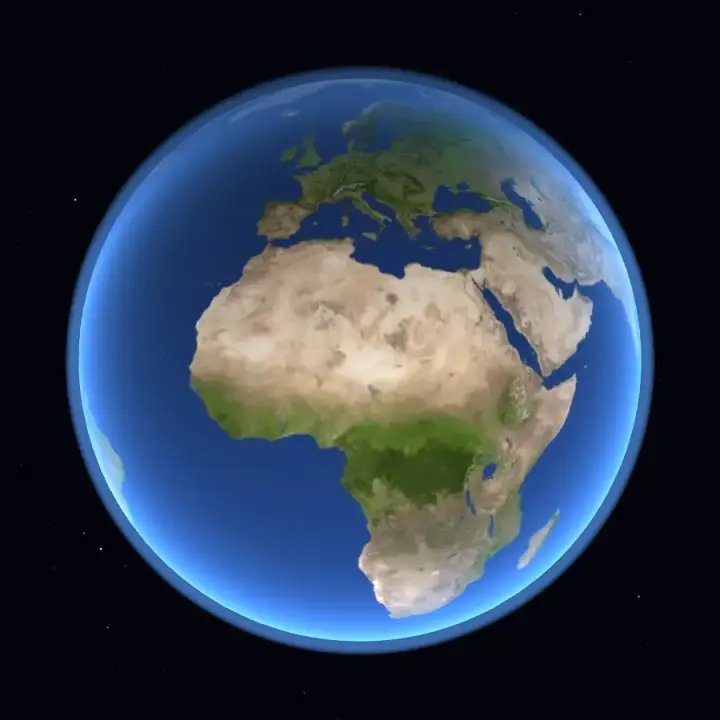
3D Earth, live
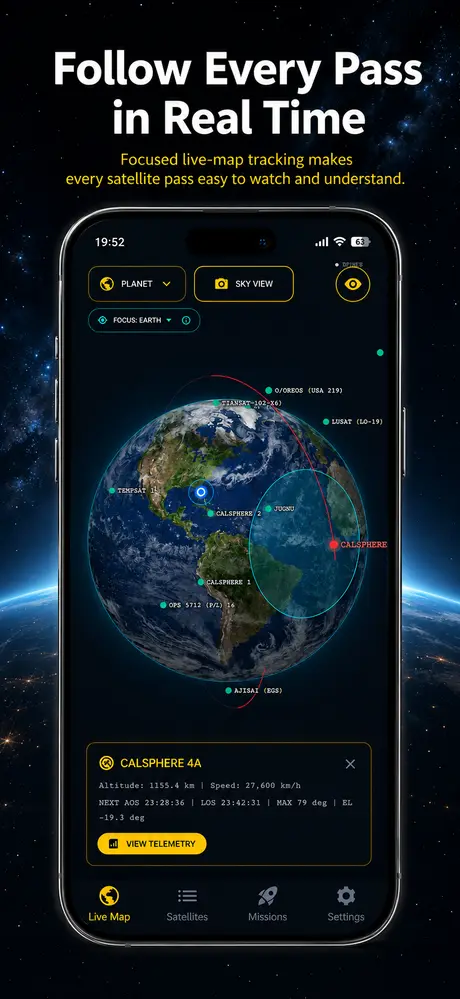
15,000+ satellites on a day/night globe with orbit paths, propagated every second in WebAssembly.
Pass predictions
Rise, peak and set for the next 7 days with naked-eye visibility and calendar reminders.
Tonight's sky
Moon phase, visible planets, darkness and an hourly cloud-cover forecast for your location.
Live solar system
Real planet positions with time travel, distances and rise/set times.
Sky radar
Every satellite above your horizon right now, with the Sun, Moon and planets.
Ham radio Doppler
SatNOGS transmitters with live Doppler-corrected uplink and downlink.
AR sky view
Point your phone at the sky to label satellites and planets.
In the appPass alerts
Notifications and Live Activities before every visible pass.
In the appWhen will a satellite pass over me?
Pick any satellite from the list, set your location, and SkyLive computes every pass above 10° for the next seven days with the SGP4 orbital model. Each row shows when the satellite rises, its highest point in the sky and where it sets.
Which passes can I see?
A pass is visible to the naked eye (★) when the satellite is lit by the Sun while your sky is dark. High passes (above 45°) are brightest and longest. Tap + Cal to add any pass to your calendar with a 10-minute reminder — or get automatic notifications in the SkyLive app.
Frequently asked questions
Which satellites fly over tonight?
Set your location and pick a satellite: the pass table lists every flyover above 10° for the next seven days, and the ★ rows are the ones visible tonight with the naked eye. The tonight report summarises the brightest passes of the evening.
What does maximum elevation mean?
It is the satellite’s highest angle above your horizon during the pass. 90° is directly overhead; passes below about 20° are low and can be blocked by buildings or trees.
Why do some passes have a star?
Starred passes happen while the satellite is sunlit and your sky is dark enough to see it — those are the ones worth going outside for.
How accurate are the satellite positions?
SkyLive propagates official two-line element sets with the SGP4/SDP4 model — the same C++ engine as the mobile apps, compiled to WebAssembly. Elements refresh daily from CelesTrak and SatNOGS, which keeps low-Earth-orbit positions within a few kilometres.
Does SkyLive sync with the mobile app?
Sign in with Google or Apple and your ground station and favorite satellites sync between the web, iPhone and Android in real time.